 OathmereALPHA
Live
Playable now
- A multiplayer world that keeps runningContinuous map, seamless zone changes, day, night and weather; the world goes on while you are offline
- Gathering and six life skillsForty kinds of trees, ten kinds of ore and wild plants; skills grow as you work
- Settlements and buildingsLand registration (several plots at once, including plots with trees or touching a main road; the land page points to the nearest plot you can register), houses and warehouses, carpentries, farms, mills, bakeries, the Town Core, the Profession School and watchtowers; buildings are placed on a grid and take as many cells as they are big, collide along their walls, and leave room to walk between houses; you can pull down your own buildings; on your own land, building draws on your warehouses; with a blueprint chosen, nearby open ground where the whole building fits is framed on the ground, one click away
- Step inside buildingsHouses, warehouses, the Town Core, the Profession School (two floors with stairs), carpentries, mills, bakeries, smithies and watchtowers can all be entered, each laid out for its work: beds and a table by the hearth, sorted shelves and a check-in counter, a council table and notice board, three practice benches and an upstairs classroom, millstones and gears, an arched oven and cooling racks, forge and anvil; people on the same floor see each other; inside and outside cannot see each other, you can invite others or open to neighbours, residents rest at home at night and craftspeople work in their shops
- Residents who work for you or live freelyCarrying, production and building; free residents gather, trade, make friends and pay for training with wood or ore earned through work. Residents staying in another home also seek a site for their own when they have a building plan and enough materials. They keep daily routines, eat bread, wild food and meat, leave after going hungry or unpaid too long while newcomers move in, and go on living when no player is near.
- Settlements that run themselvesBuild a mill, a bakery and a carpentry on open ground, and the farmer, miller, baker and carpenter you hire turn wheat into bread and logs into planks; set stock targets for the settlement and work stops once there is enough; when a trade is missing, the settlement draws a newcomer to live there, or one of your workers can learn it from you; the Stalls page of the settlement window says why each worker stopped and what to do, and can assign idle hands automatically; come back after a few days away and your workers have kept eating, getting paid and working
- A living villageResidents have a mood: food, wages paid on time, a bed and friends all affect how hard they work, and their window says why; unhappy residents leave, happy ones bring friends and family; they ask employers for raises, beds and different food; the notice board shows who came and who left; residents build their own homes and set up camps with friends, the leader builds a warehouse and then a carpentry, and a full camp becomes a village; unwatched camps still fell trees, mine and build; leaders of neighbouring camps visit each other and ally once they are friends
- Hurting residents has a priceHold Ctrl to strike a resident — but the victim holds a grudge, witnesses talk and spread it, even to other players; with a bad enough name residents stop working, trading or talking with you, and the bold ones attack you
- Settlements run togetherInvite other players into your settlement as managers or members to share its warehouses; members have a daily allowance and every deposit and withdrawal is logged
- Roads, counters and copperLearn roadwork and plan roads node by node like a city builder, building a whole road with bends at once; new houses connect to roads; counters and wages settle in copper coins
- Three ways to earn copperTake on residents' requests, hire other players or take their jobs on the notice board, and sell goods to the public buyer
- Wilderness combat and runningForest boars wind up with a warning circle at their feet; attack, guard, dash dodges and a three-hit combo; hold Space to run out of combat
- Wild creatures and huntingWolf packs from dense-forest dens surround you, more of them at night; poison mushrooms puff slowing spores; hooded, masked bandits steal coins and flee, and their chief, in a wolf-fur cloak with a great axe, dozes sitting up at night; meat, fur and bone to eat or sell; cleared dens stay empty for a while
- Smithing and gearOnce you know smithing, forge clubs, short swords, spears, leather armour and shields at a smithy; mine ironstone for iron ore and smelt it into ingots at your own smithy (or hire a resident smith) for iron weapons and armour; weapons and gear come in bronze, iron and steel tiers, with new materials such as tin ore and bronze ingots, and bronze and steel axes, pickaxes, hoes and saws; fourth-tier Ancient Root gear and tools are made from loot of the Rootfolk root caverns; gear wears and can be repaired; falling drops part of your pack, which you can come back for; cloth bags, leather packs and panniers enlarge your pack for good
- Night raids and settlement defenceBeasts raid settlements at night: a watchtower spots them early, scarecrows keep crops safe, hired guards wear the gear you give them and patrol and fight, fences and gates keep beasts out; while you are offline the night is settled by your guards' strength, and at worst you lose crops
- Bows and combat growthCraft a wooden bow and arrows at the smithy and shoot beasts from afar; melee, defence and archery grow separately, with a perk to choose at levels 5 and 10 (such as heavy blow, shield counter, rapid shot); spells grow with their own practice, spirit and your staff, in tiers that include Frost; the dash strike really carries you forward; for 15 minutes only you can pick up what you dropped when knocked down; damaged gear can be taken off and repaired, stored and traded as it is
- Profession Schools and instructorsEvery zone has a public Profession School and smithy; five mentors (2.5D pixel art) teach by craft: crafts rank as apprentice, journeyman, artisan and master, you train with a mentor at each rank cap, and higher ranks unlock more to craft and build; the school also teaches medicine, alchemy, taming and spirit; journeymen can change profession, working faster in it and alone able to train to master; hired residents have ranks too and can be sent to school at their cap (the employer pays)
- Responsive movement and network syncInstant local response; stopping and others moving stay smooth under high latency, packet loss and zone changes
- Social play and automatic updatesChat, friends (per character), parties and groups; the launcher updates itself, measures download routes and picks the faster one, keeps progress and resumes after a network break, and lets you choose a route by hand; the Mac version downloads only changed files; it takes you straight to the character page after signing in; a forgotten password is reset by account name or email, and if you cannot sign in you can ask for help on the website or the login page
- Everyday objects and handcraftLearn handcraft at the school and place wells, benches, lamp posts, barrels and more (12 kinds), each with a use
- Wilds that get tougher farther outMonsters grow stronger and drop more the farther you go; dens have leaders, grow if left alone and draw night raids, and leave spoils when cleared
- All kinds of people and motionsFour body types for men, women, young and old, four skin tones, plus clothes and hair colour at character creation; more than a hundred motions: every weapon has its own attacks, combos and finishers, held guards, staff strikes and casting, staggering under blows, getting up hurt after a knockdown, work such as felling, mining, sawing, smithing, kneading, milling, hoeing, sowing, reaping and sweeping, and gestures such as nodding, bowing, dancing and sitting on the ground, shown to people nearby with V; characters show the weapon they hold, to everyone around; techniques and perks have icons
- Ores, smelting and jewelryNine ore kinds with their own products; copper, silver and gold ingots, rings and necklaces, spice for seasoning
- Produce, fishing and livestockGrow vegetables and pick fruit, with carrots, turnips and beans showing their own growth stages; fish at the water; lead wild cattle, sheep and chickens home to the stable for milk, wool and eggs every day, each with its own look
- Regional cultures and ruinsEach region is named after its local culture and keeps its own customs, and residents talk with their region's customs and sayings; stone rings, steles, broken walls and dry wells stand in the wilds as weathered stone, coloured by the people who left them, with old barrels, woodpiles and handcarts strewn around; the map marks ruins, greying the ones you have read, and inscriptions enter the chronicle
- Approving newcomersYou approve each newcomer who applies; workers give notice before they leave
- Character screen and several charactersSee all your characters (up to 3) on the character screen; create, delete and restore them (a deleted character can be restored for 7 days), and switch characters from the game
- Techniques, builds and effectsMore than sixty techniques across four disciplines — martial arts, magic, inner force and cultivation — each with single-target and area moves (circles, cones, lines, landing bursts, chains, slows and freezes, shields, healing, dashes and executes), learned at school, with advanced ones needing the previous one practised first; the effects of the main disciplines' techniques have been remade in one pixel style, with a clearer wind-up, release, impact and recovery rhythm, and dash landing effects follow the server's resolution; casting previews its area; four active slots for techniques and four passive slots for perks, with five build presets applied in one click; techniques have a wind-up and recovery and casting needs you to stand still; long crowd control is not cut short by a brief one
- Leading squads into the fieldEnlist your hired guards in squads and set out with rations, with five orders: follow, go, hold, focus and retreat; cross zones and clear lairs together; mix archers, spearmen and shield bearers, up to four squads each, with formations and facing; the captain marks rally, attack and retreat points on the ground, and L pulls the camera back to command; guards grow in real fights and can be sent to school at their cap
- Large squad battlesFour players, each leading up to sixteen guards, fight side by side and stay smooth against a hundred beasts: the server spreads its work and compresses updates while distant residents live on as usual; squads and the supplies they carry come back after a disconnect or a server restart
- Working for othersTown owners post jobs and players apply on the notice board's Jobs page, earning a daily base wage plus piece pay; resident towns such as Qinggu hire too, smithies take repair orders, and guards, patrols, escorts and teachers are paid for the work they actually do
- A world that keeps growingThe world has no fixed edge: new regions keep appearing in every direction as players explore, their roads joined to their neighbours, bringing ponds, lakes, seas and islands, new coasts and new land; crossing between regions no longer makes characters jump
- After the fightFallen beasts, bandits and livestock leave bodies that look like them and slowly turn to bones, and a few scattered bones stay for good; downed characters show wounds and blood, and get up visibly hurt
- Your own keys and layoutSet your own keys for techniques, food, squads and more; scale the interface up to 150% or 200%, or let it follow the window size; the map, notice board, goals and character windows look like journal pages, or switch them to dark; drag and pin the quest panel and minimap, and resize the warehouse window
- A new name: OathmereThe game is now called Oathmere, with its website at oathmere.online; downloads, the launcher and the game carry the new name, and installed launchers update themselves
- Password recovery and sign-in helpIf you forget your password, both the launcher and the game's sign-in page can recover it with your account name or registered email; if you cannot sign in, ask for help on the website or the sign-in page
- The "Frontier Journal" lookUnexplored land is a blank journal page with ink-wash edges; buildings have hand-painted textures and lit windows at night; chimney smoke, splashing rain, leaping fish and falling leaves are pixel-art effects
- A guided first hourFirst-hour goals lead you step by step from settling in Qinggu to founding a settlement; the build window finds nearby open ground where a whole building fits and takes you there; the ground near Qinggu's starting point and the central meadow are kept for new players; clicking your own house walks you to the door and inside
- Star Marrow Towers, Waystones and teleportingBuild a Star Marrow Tower (no registered land needed), then raise Waystones and teleport between your own: a 3-second channel and a 5-minute cooldown, taking only yourself, your bag and what you wear; watchtowers no longer need registered land; watchtowers, towers and Waystones can all be attacked and destroyed, repaired with planks when damaged, and their destruction goes into the region's chronicle; teleport lists identify village ownership and your own destinations
- The sound of the worldMeadow, forest, lakeshore, coast and village ambience that follows day, night and weather; an exploring theme in the wild, village and dusk themes among houses, and a short sting when a fight begins; swings, hits, every technique, beasts, work, footsteps and the interface all sound, quieter the farther away; master, music, effects and ambience volumes each adjustable
- The first dungeonBelow ruined stairs around the world, fight through a wolf warren with friends, defeat the Den King and come back up with what you found; fall and try again, and chests cannot be farmed
- The Tower of the First Law, the Record of Lives and its spiritTravel from an already built waystone to the floating public tower, which rises five floors with differently shaped stairs and a camera that follows continuously; click the floor or a stair inside to walk there along the stairs; meet the silver-haired spirit in the hall and read her fixed guidance; explore nine creation steles and the world's creation record, then three upper chambers with accounts of people and their techniques; combat and construction are disabled inside, and the forecourt circle returns you to your departure waystone
- Factions and diplomacyTown lords can found a faction, invite other towns and assign offices. Residents form city-states on their own, and a player town can swear to a strong city-state as a vassal and later buy its freedom. Factions sign trade, passage, non-aggression and alliance treaties: trade partners pay no market tax, passage partners share waystones, and hostile factions can neither trade nor use each other's waystones. Resident factions propose or refuse treaties by themselves and tell you why
- Armies and background warsResident factions recruit from their own people: recruits stop their old work, eat one loaf a day and drill while on guard; starved soldiers lose morale and desert back to their old jobs. Armies can garrison, patrol, escort caravans and march. Hostile resident factions may raid each other, with wars off by default; when one happens, the fallen are real residents and the chronicle records which battle they died in. The faction window shows armies and war reports
- Running a settlement togetherOne settlement page shows staffing, bottlenecks, today's income and spending, disasters and what the manager has been doing. A lord can authorise player managers or a resident town manager to hire, spend from the treasury and queue public works, within daily limits and a reserve; anything beyond them is refused and logged. While the lord is away the manager hires toward the goals and pays public works from the treasury, and repairs after a fire or raid show their progress.
- Conquest, sieges and offline defenceResident factions can conquer city-states; a settlement left empty becomes a ruin and its survivors scatter to nearby regions. Hostile factions may also attack a player's town: guards and residents defend it, the core is destroyed and the store looted, but the land is never lost and the core can be rebuilt on the spot; an owner who is online may kneel as a vassal instead. Walls make a siege last longer, and a breach really tears down a stretch of wall. While a player is present the fight runs in real time and every soldier on the field is a real resident; a squad's garrison and patrol orders hold while its commander is offline
- The rise and fall of settlements and factionsWith no player around, the world still writes its own history: colonies can grow into city-states, a friendly small city-state may join a larger one, a city-state ruling three cities becomes an empire, and an empire falls back when it shrinks. Neighbours fall out over land, long silence and the memory of wars, and either side may declare war; in wartime residents are called up, armies stay home and member settlements share grain. Every founding, merger, conquest and collapse is kept in the chronicle with its reason
- Natural landscapes stretching into the distanceDistant terrain, forests and water extend up to about one kilometre; the Visual Range setting under System Settings, Graphics has five levels, each seeing twice as far as the last; seeing the landscape does not automatically uncover unexplored parts of the map, and hidden places and entities still need to be discovered through exploration
- Travel on horsebackMount and dismount, walk, run and gallop while managing stamina; have your horse follow, wait in place or come when called, and carry items in its saddlebags; the stable has its own window showing each horse's condition, hunger and location, where you lead horses out and bring them back; every horse has a fixed number, and if a horse runs off its saddle comes back by mail with the contents
- Scenery that changes with the seasonsGrass, tree canopies and ground change through the seasons, with autumn colours, winter snow cover and spring thaw; nearby scenery and distant landscapes follow the same season
In development
Being built; ships with an upcoming version
- Ancient waygates and resident travelAncient waygates guarded by monster camps appear at random in the wilds; clear the guards and find one, and you can teleport there, and a destroyed one appears again elsewhere; resident leaders will build towers and Waystones too, for caravans setting out and coming home; squads will be able to attack these buildings
- Sound and musicAmbient sound for forests, meadows, lakes, coasts and villages that changes with night and rain; sound effects for fighting and techniques; and background music
- Residents' long-term plansResidents set themselves long-term plans — saving up to build or buy a house, learning a craft at school, changing trades, founding a camp with friends, starting a family, moving somewhere better — and work towards them day by day; their plans show in the resident window
- Living settlementsResidents' camps and villages, and towns such as Qinggu, expand on their own and welcome newcomers, hold markets and festivals, face raids and disasters, and respond to their funds, stores and population; where people keep walking the ground wears into footpaths and dirt roads, settlements pave the busiest ways, unused paths grow over and vanish, and lights shine where someone lives; follow it all in the village news, the chronicle and the map
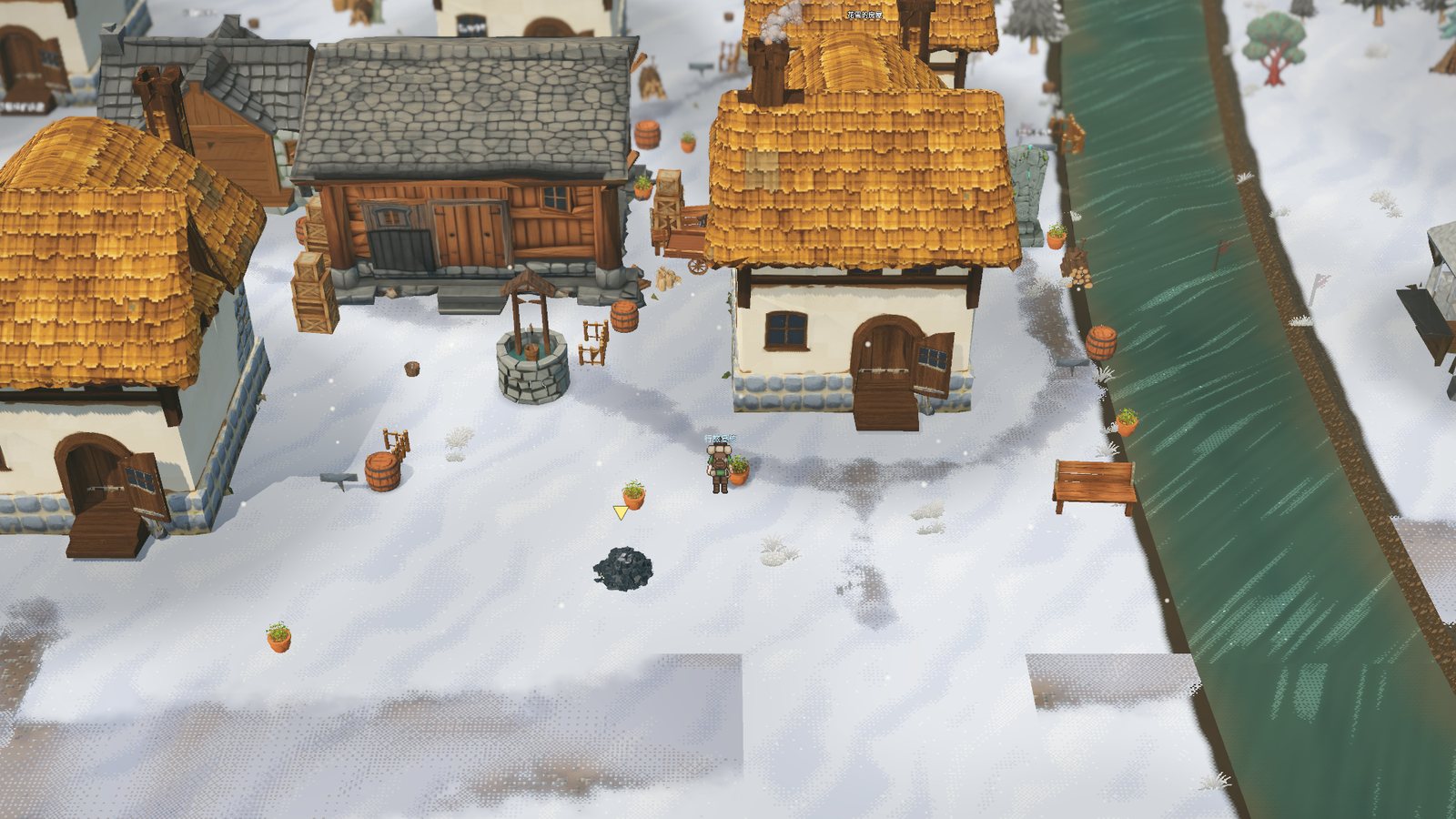
- 3D view mode (preview)The same world and the same characters: switch to 3D in the launcher's Settings, from the next start. It uses a first-person view: aim with the crosshair to interact and attack (the crosshair shows whether the target is in reach; for beasts within 8 m, step into reach and strike once; movement, Esc or opening a window cancels it), and interiors, dungeons and the Tower of the First Law are first person too; trees are solid models that change colour with the seasons; people share one look for now, some plants, animals and monsters are still flat images and some actions still show a standing pose while they are being made. 2D stays the default
Planned
Direction set; details will change
- Resident tribesOnce residents have long-term plans, they will talk among themselves, help one another and form tribes by friendship and kinship
- More regions and storiesThe map already grows new regions by itself, each with its own customs and ruins; next, giving the lands beyond Qinggu their own stories
- One seamless world on many serversWhen more people come, several servers will carry one world, with no reconnect or pause at server borders; hand-overs, seeing across borders and failover already work in testing; the live world runs on one server for now, and the switch has no date yet
Recent versions
Full details in the update log.
A new website, and a new game client on the wayThe website has a new look: wider pages, larger pictures, and downloads, updates, the roadmap and server status are easier to find. The game is also moving to an all-new client, which will reach you through automatic updates when it is ready.Release 311Residents’ self-run lives keep improving: fixed free children failing to eat the wild food they gather; goods held for someone else that can no longer be returned are set down; couples living apart can swap homes to reunite; an acting mayor short of wood or ore first hires the town’s own loggers and miners before buying.Release 310Residents’ lives keep improving: a child who has lost both parents is cared for by kin or a willing household, and a downed resident gets up again; 3D mode fixes for aimed attacks, standing and the camera on slopes, and camps on hillsides; house sites offered are no longer too steep; smoother zone loading.Release 3093D mode (preview) is open: choose 3D in the launcher, 2D stays the default; you can now climb hillsides on foot, slower the steeper they are; village decorations are 3D models placed by use; fixes for queuing repairs in public works and for the stutter when opening Settings.Release 308Settlement ranks now have population requirements: a village needs at least 10 people and a large village at least 40; also fixes a village’s daily settlement stopping when a festival fell on its market day.Release 307The stewardship page now shows the acting mayor’s commitments and the treasury books; the acting mayor plans building by the village’s real income and spending, and zone loading is smoother.