 OathmereALPHA

The Tower of the First Law
The Tower of the First Law is a shared place at sea. Its spirit guards the hall, creation steles stand to the north, and three upper chambers preserve the Record of Lives.
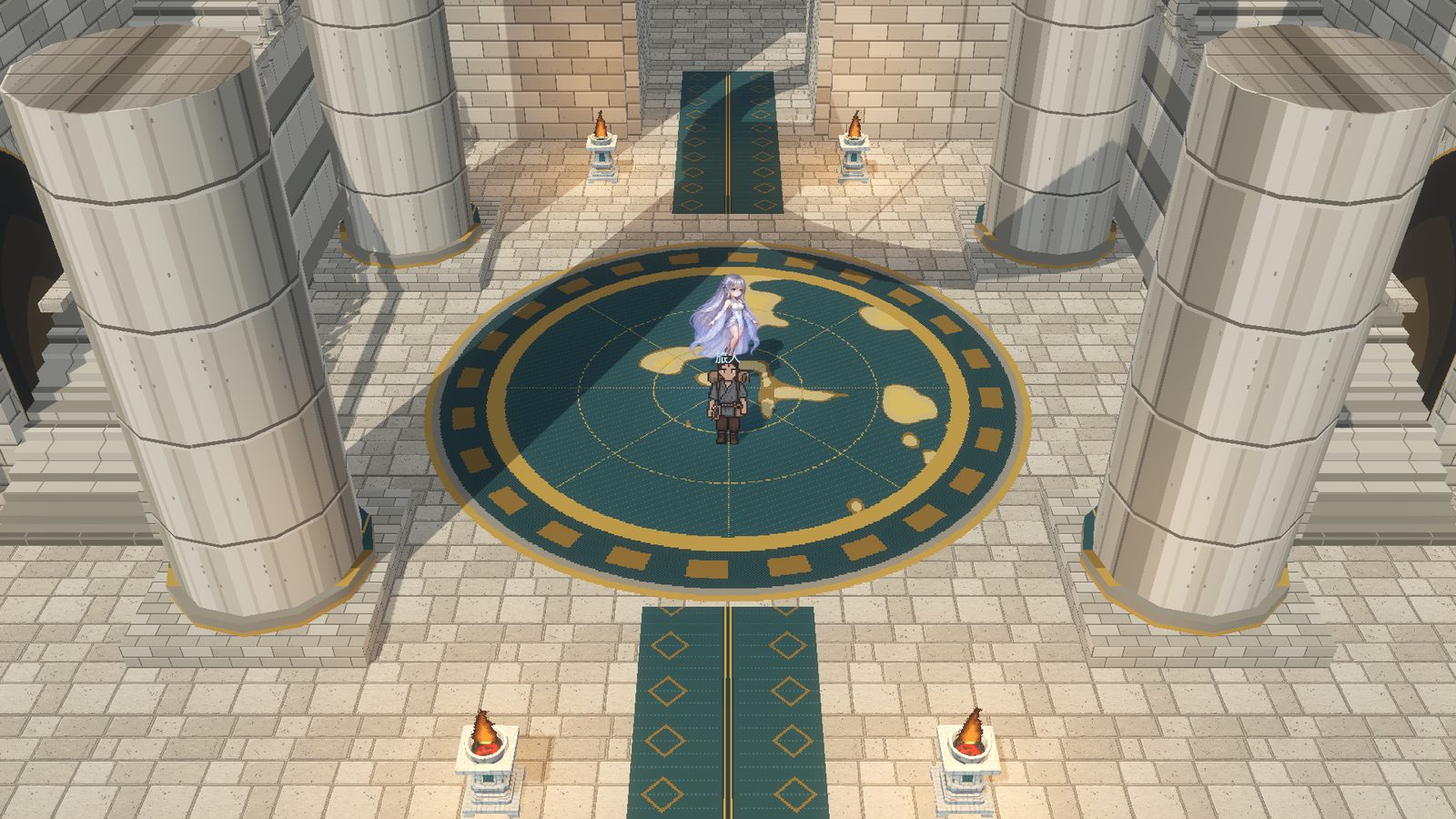
An immortal stranger
You will not die of old age, and when you are struck down you get up again, wounded — yet no one knows where that immortality comes from. Coming to Qinggu does not grant you land, wealth or any natural right to rule.
Meet the people around you, gather materials and find a place to settle. Your first home is yours to build.
Residents make their own choices
They have professions, needs and memories, and things they care about. Talking, helping and working together build relationships; whether they accept a job still depends on the terms and their own will. Good food, wages paid on time, a bed and friends all show in their mood: unhappy residents move away, happy ones bring friends and family.
When nobody hires them they make a living on their own: gathering, trading at counters, chatting with neighbours, and once they have saved enough materials, building a house for themselves. Ambitious residents set up camps with their friends — the leader builds a warehouse, then a carpentry, and a full camp becomes a village; leaders of neighbouring camps visit each other and ally once they are friends.
Lin ZhouLogger
Lives by work in the woods; diligent and happy to talk. Fair working conditions are where cooperation begins.
Shi LanMiner
Lives by digging and hauling ore; careful with words, values pay and conditions, and does not easily agree to unsuitable work.
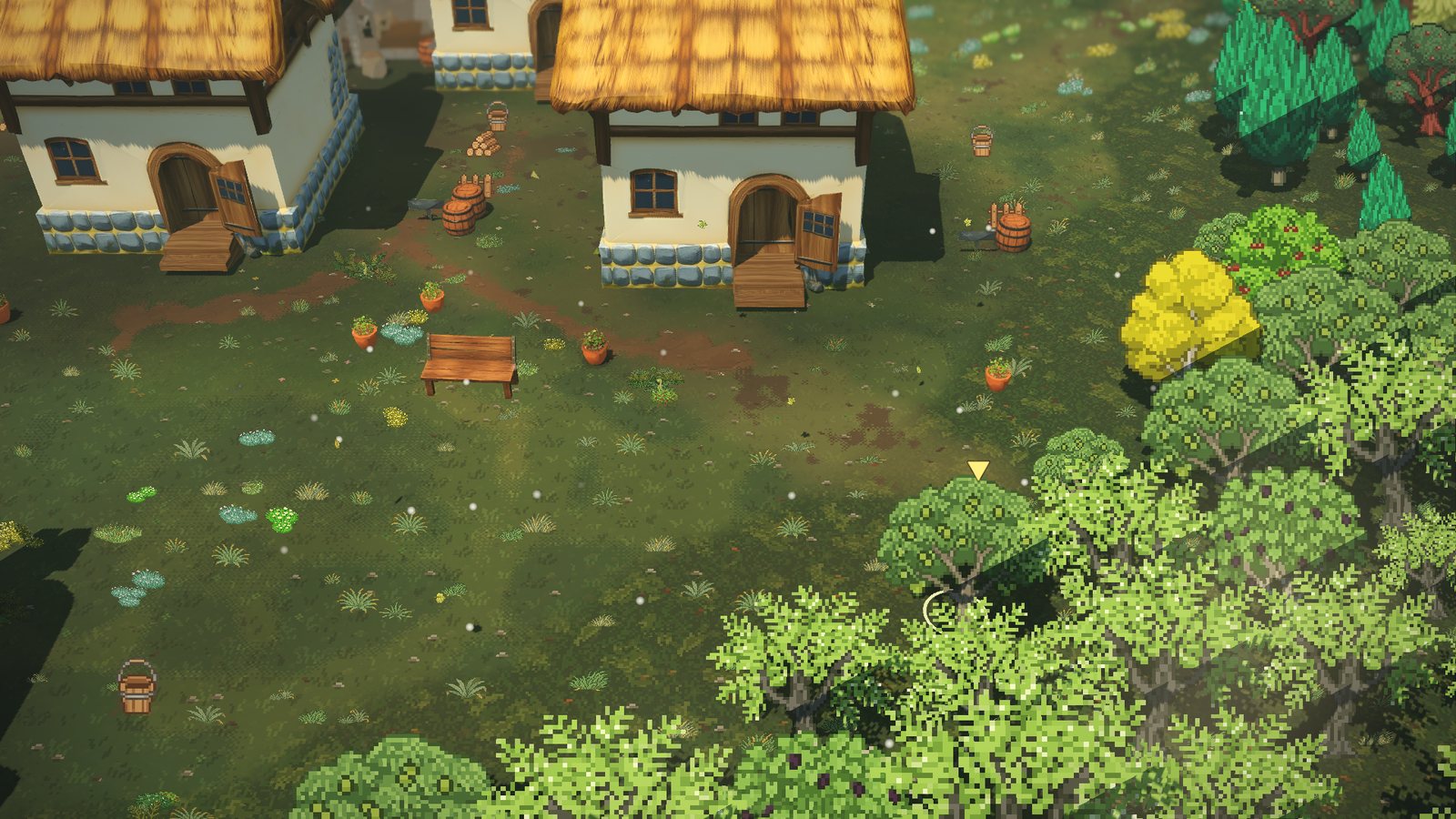
Starting slowly from one foothold
Gather wood, make planks, register land and build homes, workshops and warehouses. Every building can be entered: beds and a table by the hearth, sorted shelves, millstones and ovens, forge and anvil. Residents can be hired to carry, craft and build, and they also need rest and food; after you log off, the world keeps running.
Clear farmland and turn wheat into bread; smelt iron ore into ingots at a smithy for weapons and armour; learn crafts from the mentors at the Profession School, from apprentice all the way to master. As your home grows into a settlement you can build a Town Core and invite other players to run it with you; land borders never stop others from passing through. Build a Star Marrow Tower and raise Waystones to teleport between your own — though watchtowers, towers and Waystones can all be attacked and destroyed.
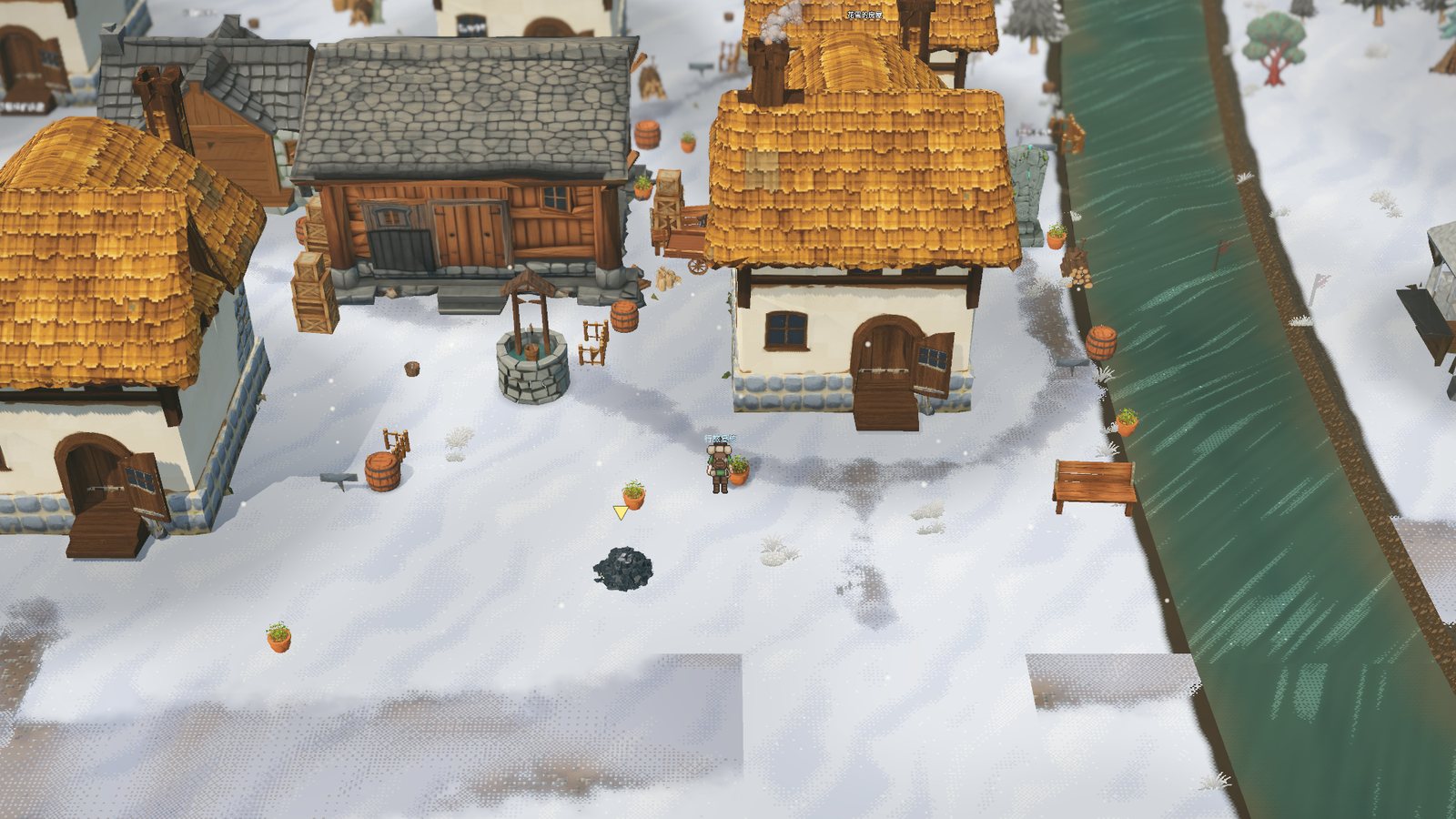
The wilds are not safe
Forest boars wind up with a warning circle glowing at their feet; wolf packs from dense-forest dens come out in greater numbers at night and close in from both sides; poison mushrooms puff spores that slow you down; roadside bandits snatch your copper and run, while their chief, in a wolf-fur cloak with a great axe, dozes sitting up at night. The farther from the start, the stronger the beasts and the richer the spoils.
Dens have chiefs who grow stronger when left alone and bring night raids: watchtowers spot them early, scarecrows guard the fields, hired guards in the gear you give them patrol and fight, and fences and gates hold beasts back. Fallen beasts leave bodies that slowly turn to bones, and a few of those bones stay where they lie for good.
Ruins and local customs
Every region has a culture of its own: places are named the way the locals would, and residents talk with their region's customs and sayings. Stone rings, steles, broken walls and dry wells out in the wilds were left by those who came before, the stone coloured by the people who raised it; inscriptions you read go into the chronicle, and the map marks where the ruins stand.
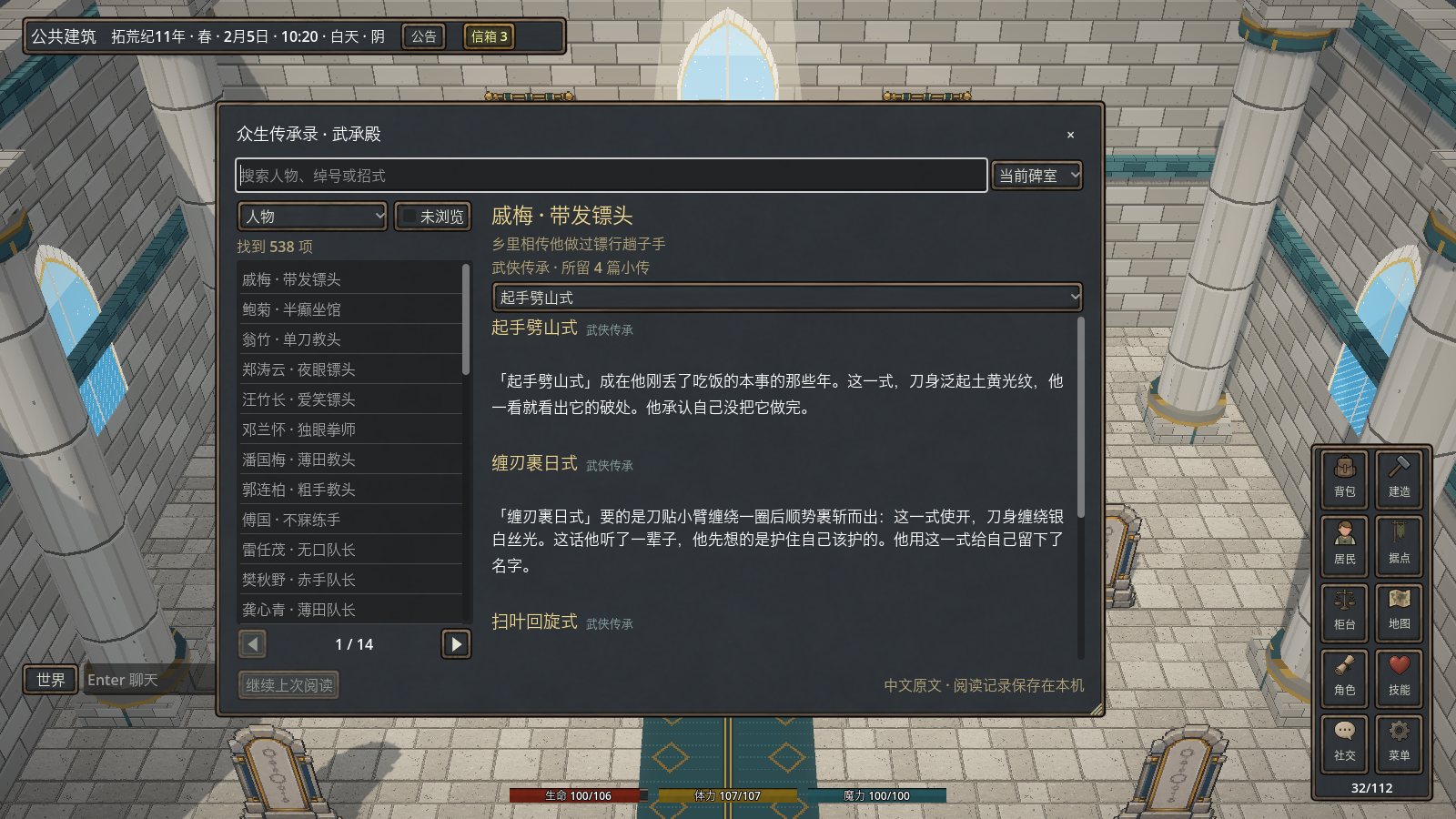
The three inscription chambers upstairs in the Tower of the First Law hold Lives and Legacies: stories of people and the techniques they left behind. The reading interface supports Chinese, English and Japanese; the literary passages remain in their original Chinese.
A world without end
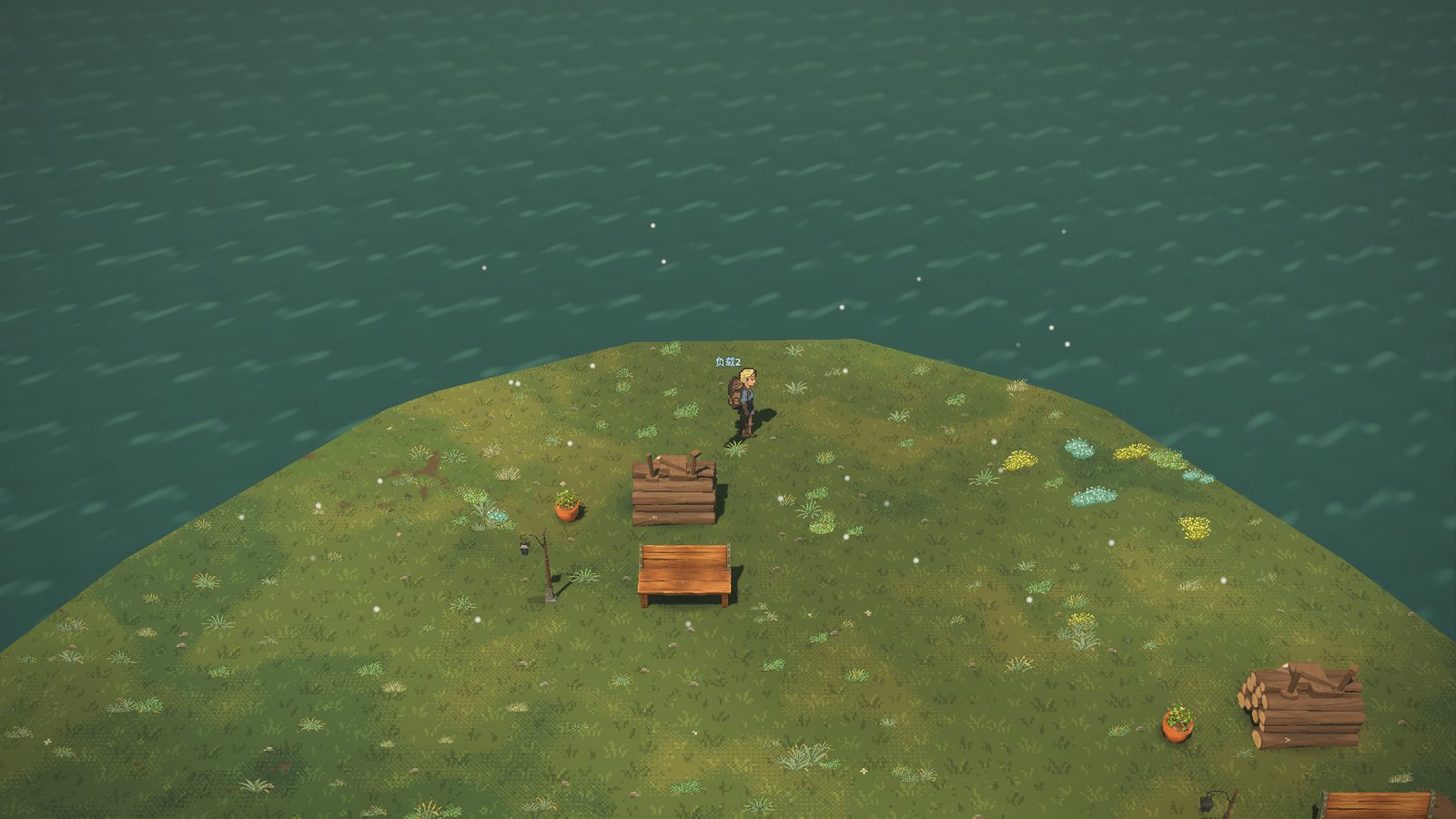
The world has no fixed edge and keeps growing in every direction as players explore: roads in new areas join those of their neighbours, and an area may bring ponds, lakes, seas and islands, new coasts or new land, with water running on across area borders. Water cannot be walked on, and buildings, land and beasts are kept off it; the shores hold sandstone and granite, and you can fish at the water's edge.
Dealing with other players
Keep in touch through friends, chat, temporary parties and social groups, and clear dens together; buy and sell at counters, take a post someone has put up on the notice board, or hire other players to work for you. Others can manage your settlement or use your warehouses only when you invite them; members have a daily allowance, and every deposit and withdrawal is logged.